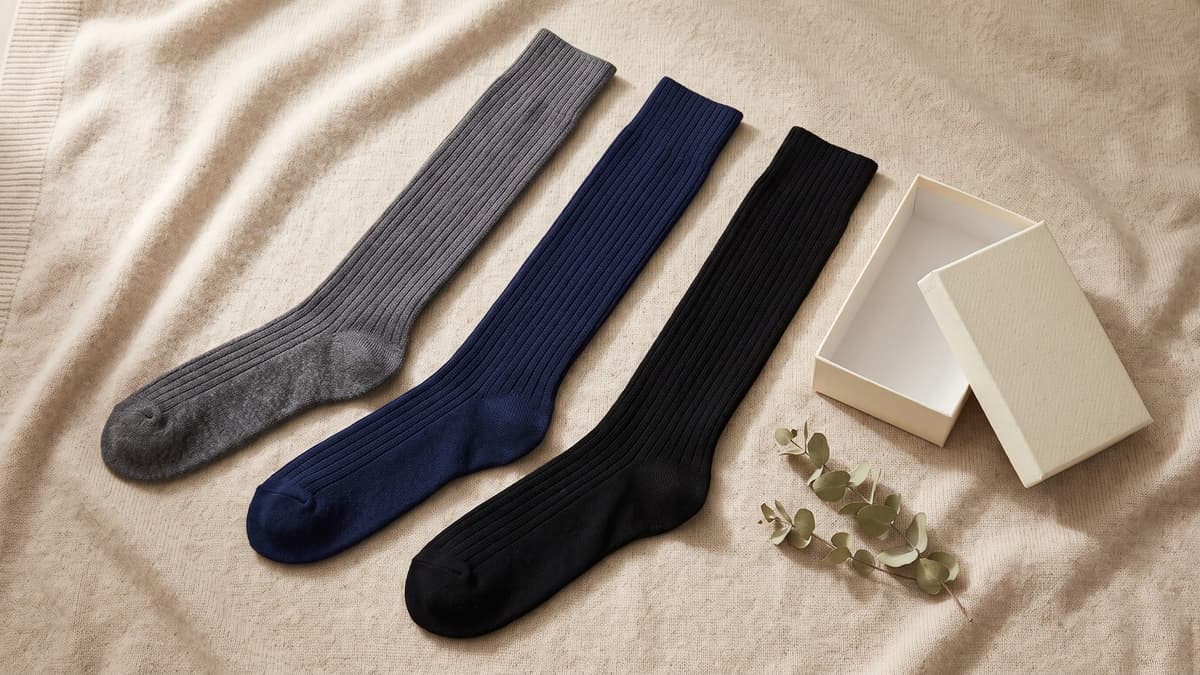
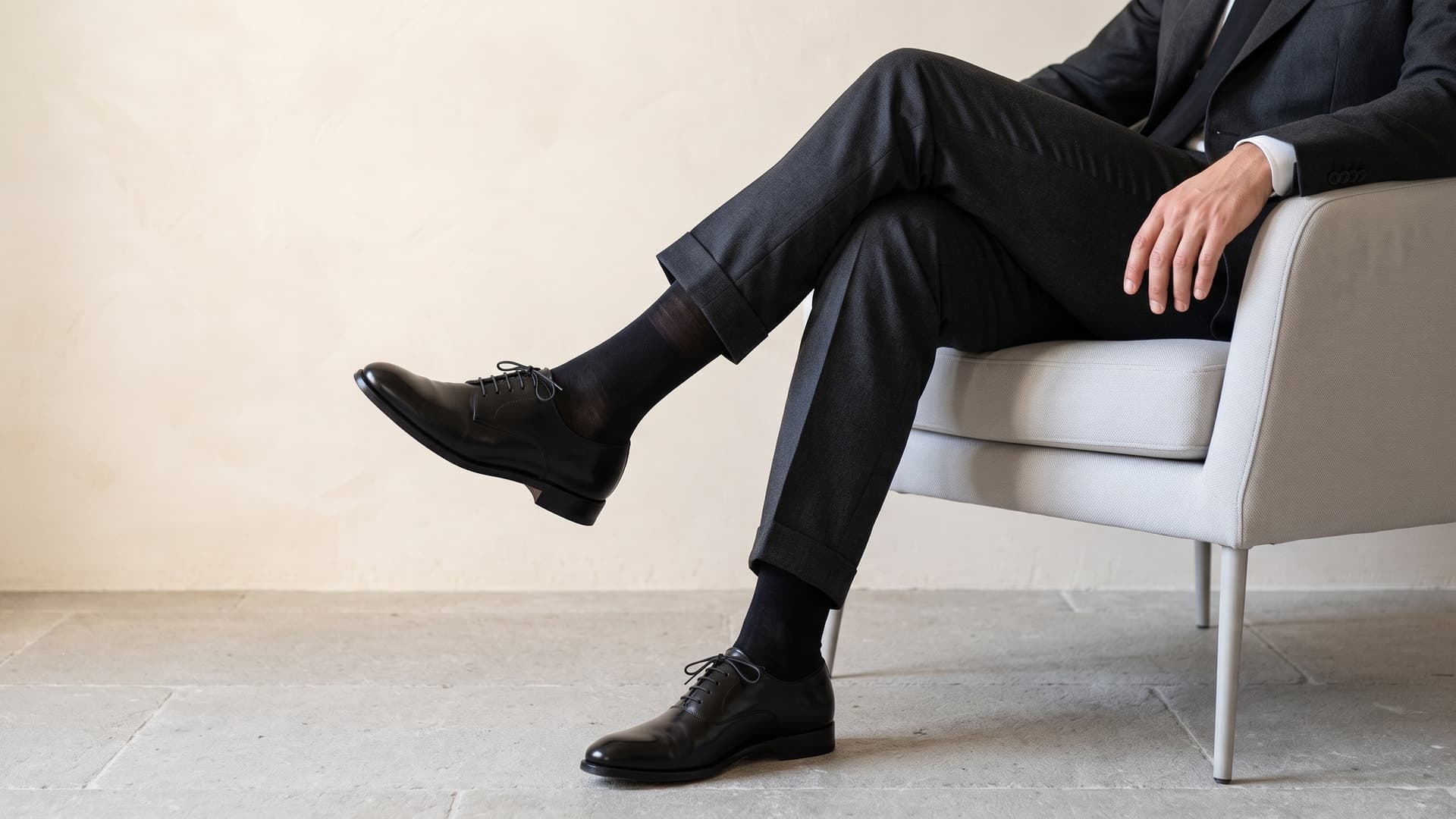
Men's wool and silk socks are the answer for those who wear elegant shoes all winter long: wool provides warmth and regulates moisture, while silk adds lustre and durability. The result is a thin sock that genuinely keeps you warm and fits effortlessly inside a lace-up shoe.
Those who work in a suit and tie know the dilemma. A thick sock keeps you warm but squeezes the foot and ruins the shoe's silhouette. A fine cotton sock looks elegant but isn't enough in January. The wool and silk blend was created precisely for this reason.
In this guide we look at how it works, how it compares with merino and warm cotton, what to pair it with and how to wash it. If you want a broader overview of winter fibres, you can also find our guide to the best men's wool socks.
Why choose men's wool and silk socks
Every fibre has its strength. Combined in the same yarn, they complement each other.
What wool provides
Wool is a thermoregulating fibre. It traps air between the fibres and insulates against the cold. It also absorbs moisture from the foot without making it feel wet. This is why the foot stays warm and dry even on a long day, moving between the office, the train and dinner.
What silk provides
Silk brings three things: lustre, smoothness and durability. The yarn has a more refined appearance than pure wool, and the sock slides easily into the shoe. Above all, it lasts: the knit withstands daily use and washing without giving way.
How ours are made
The men's long wool and silk socks (art. 844) are composed of 75% wool and 25% silk. They have an elastic band that holds the sock in place without leaving marks on the leg. For those who prefer a shorter model, there is art. 844/1, in a merino wool and silk blend, of medium weight and fineness.
For over a century, since 1912, we have been working with noble yarns in Quinzano d'Oglio to make socks that last. The principle has always been the same: a thin sock does not have to be a fragile sock.
Who they are ideal for
- Those who work in an office and wear lace-ups or a suit from Monday to Friday.
- Those who attend winter ceremonies: weddings, christenings, gala dinners, where a lustrous sock makes a difference.
- Those who cannot bear thick socks inside narrow-fitting shoes.
- Those looking for a gift that is both elegant and practical, something other than the usual tie.
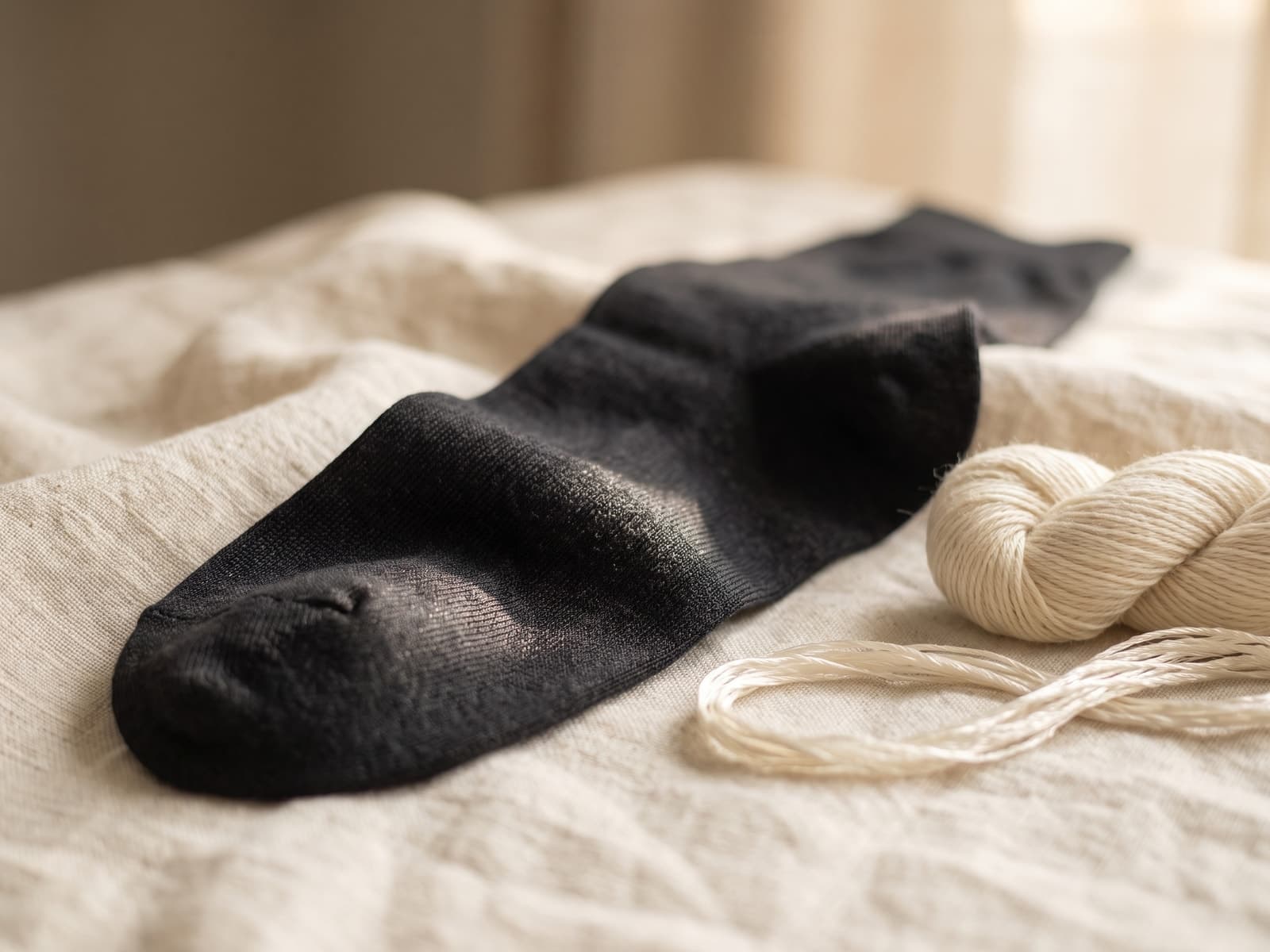
Wool and silk, merino wool or warm cotton: a comparison
There is no universally perfect sock. There is simply the right one for your shoe, environment and temperature. Here is how the three most common winter options stack up.
| Wool and silk | Merino wool / lambswool | Warm cotton | |
|---|---|---|---|
| Thickness | Thin or medium weight | Medium or thick, often wide-rib | Medium |
| Warmth | Good, with minimal bulk | Very high | Moderate |
| Appearance | Lustrous, smooth, dress style | Matte, more textured | Compact, more casual |
| Ideal with | Lace-ups and suits | Ankle boots, loafers, leisure | Everyday and casual use |
| Care | Gentle wash at 30° | Gentle wash at 30° | Easier |
Pure merino wool remains unbeatable when the cold is serious and the shoe is roomy. Warm cotton is practical and easy to wash. Wool and silk wins on the point that matters most to those who dress elegantly: warmth without bulk. If you want to explore the differences between fibres further, also read how to choose men's winter socks.
How to wear wool and silk socks
The basic rule is simple: the thinner and more formal the shoe, the finer the sock should be. This is where wool and silk works best.
With a suit and flannel
A suit in worsted wool or grey flannel calls for a sock in a matching tone. A long wool and silk sock stays under the trouser leg even when you sit down. No bare skin showing mid-calf, and no cold calf in a meeting.
With lace-ups
Oxfords, derbies and Bluchers have a close-fitting shape. A thick sock shows immediately here: the instep swells and the shoe pulls. The wool and silk blend is thin, so it leaves room for the foot and does not alter the fit. In model 844/1, the toe and heel are also reinforced precisely where the sock wears first.
With loafers
With loafers and penny loafers, a short sock is more commonly worn — one that is barely visible. This works when the trouser is cropped at the ankle. In winter, however, the calf-length version is more comfortable and warmer.

Men's wool and silk socks: colours and pairings
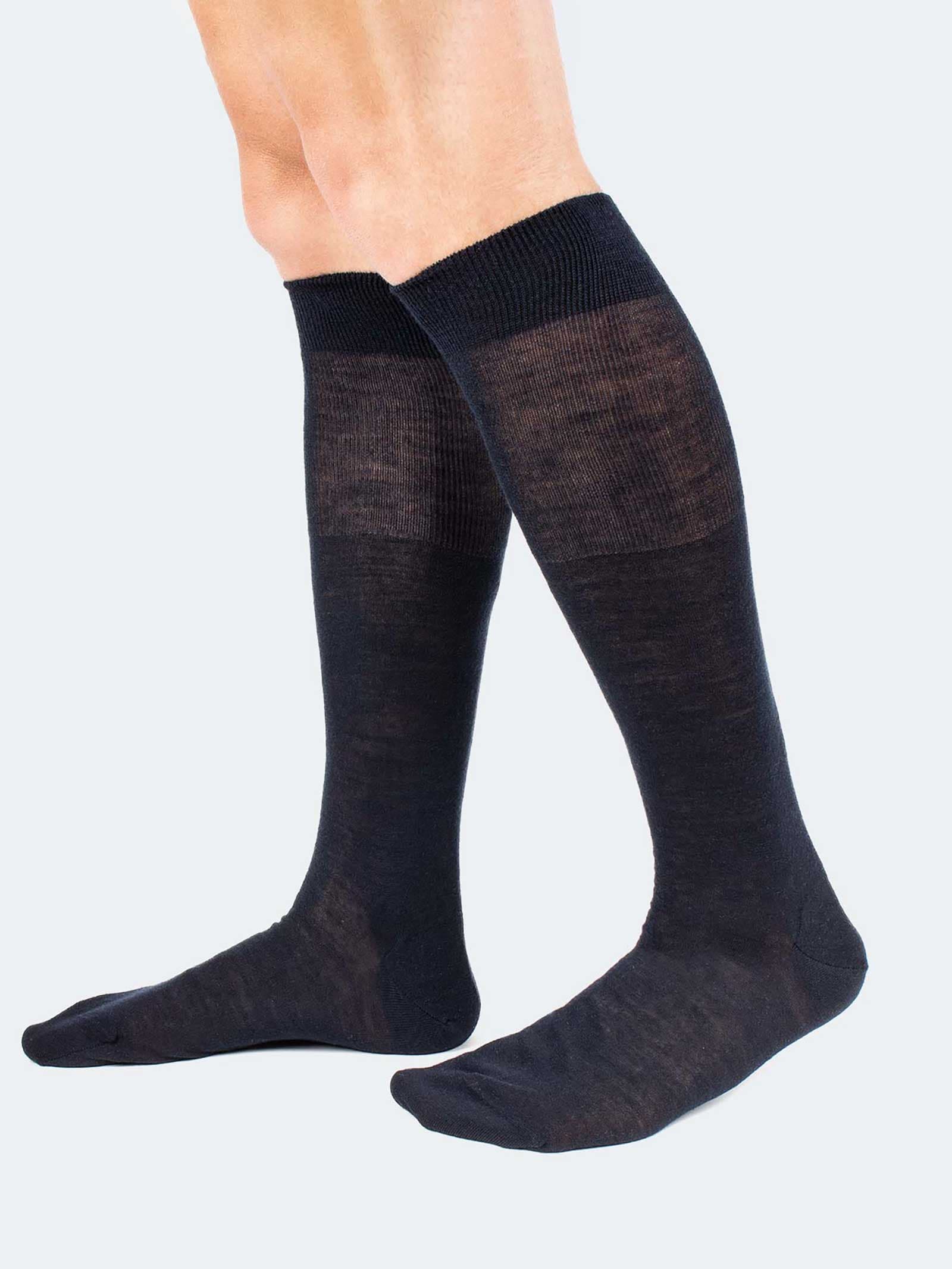
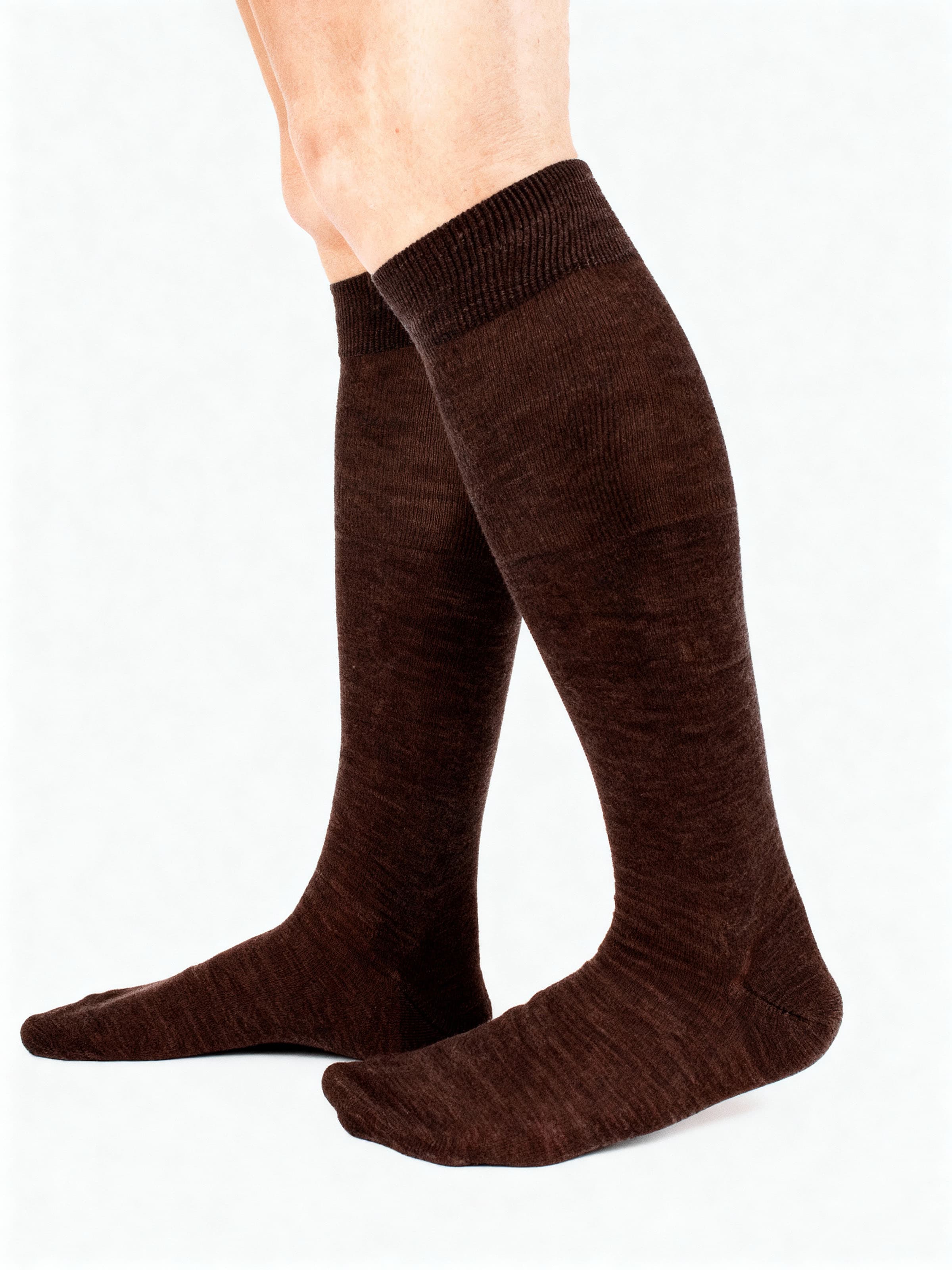
Art. 844 is available in six shades: black, navy blue, anthracite, grey, bordeaux and brown. The classic approach is to choose a sock colour that harmonises with the trousers, so that the leg remains an unbroken line down to the shoe.
- Black: the foundation for ceremonies, dark suits and black shoes. If you only buy one pair, start here.
- Navy blue: the natural companion to a navy suit. It also works well with grey and with brown shoes.
- Anthracite: the most versatile. It works with grey suits, dark blues and black, and is less severe than black.
- Grey: ideal with flannel and medium-grey trousers. Slightly lighter than the trouser adds a touch of lightness.
- Bordeaux: for those who want a characterful detail. With blue and grey it stands out just the right amount, and with tan or dark brown shoes it is very elegant.
- Brown: with tweed, velvet, earth-toned trousers and brown shoes.
A practical tip: with brown shoes and grey trousers, choose the sock to match the trousers or an intermediate shade — not black. And if you are not sure where to begin, start with three pairs: black, anthracite and navy.
Long or short socks?
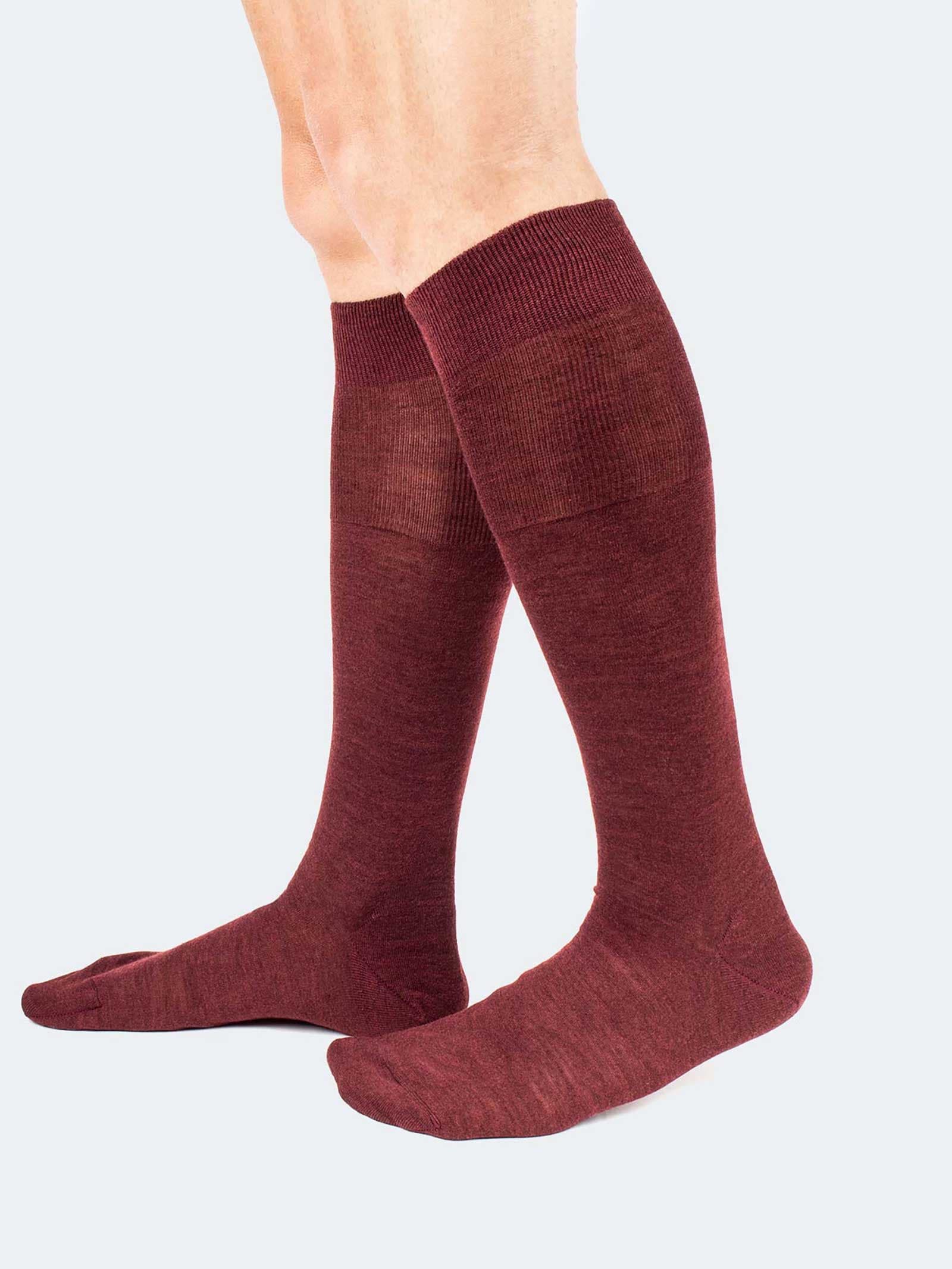
In winter the answer is almost always: long. When you sit down, the trouser rides up. A short sock leaves the leg exposed at precisely the moment when you are most visible. Moreover, the calf section keeps you warm.
Short socks (such as the 844/1) make sense with shorter trousers, chinos and loafers, and for those who find a high cuff uncomfortable. They are made from a merino wool and silk blend, medium weight, with a soft cuff that holds them in place.
The rule we follow: long for the office and formal occasions, short for the weekend.
Care and washing
Wool and silk is durable but deserves a little care. The yarn withstands daily use and washing, maintaining its shape, colour and lustre over time. Here is how to help it do so.
- Wash at 30° on a delicate cycle with a mild detergent, ideally one designed for delicate garments.
- Turn them inside out before washing and place them in a laundry bag.
- Avoid a strong spin cycle and the tumble dryer: heat and friction are wool's enemies.
- Dry them flat, away from radiators and direct sunlight.
- Let the pair rest for a day between wears: the fibre relaxes and the sock lasts longer.
One final note: always read the care label inside the sock or on the packaging, which remains the reference for each individual article.
If you want more wool: two alternatives
If you feel the cold easily or spend a lot of time outdoors, warmer models are available. The long wide-rib pure lambswool socks are soft and silky to the touch, with reinforced toe and heel. The long merino wool socks keep the foot warm and dry and are designed for the office, home and evening. You can find all models in the men's wool socks collection.
FAQ
Frequently asked questions about wool and silk socks
No, as long as the wool is fine and the knit is well crafted. Silk adds smoothness and makes the feel softer than pure wool. Those with very sensitive skin can always try a pair and see how they get on.
Only if they are treated carelessly. Felting is caused by heat, water and friction. Wash them at 30° on a delicate cycle, without a strong spin or tumble dryer, and they will stay soft and true to size.
At 30° with a mild detergent, turned inside out and placed in a laundry bag. Leave them to dry flat, away from heat sources. Always check the care label on your specific model.
Five to seven pairs will cover the working week and allow the fibre to rest between wears. A good starting point: three pairs in wool and silk in black, anthracite and navy, plus one pair in bordeaux or brown.
Yes: they are designed precisely for this. The lustre of the silk and the reduced thickness make them ideal with a suit and lace-up shoes, whether at the office or at a winter wedding.
Scottish thread is a fine cotton, cool and smooth, perfect for every season. Wool and silk is warmer and is the choice for cold months. Alternating them during the week is an excellent solution.
For winter
Warm without weight, elegant without effort
Discover long wool and silk socks and pair them with a Scottish thread pair: the weekly alternation that makes every pair last longer.